

What is an ILS and how does a precision approach work?
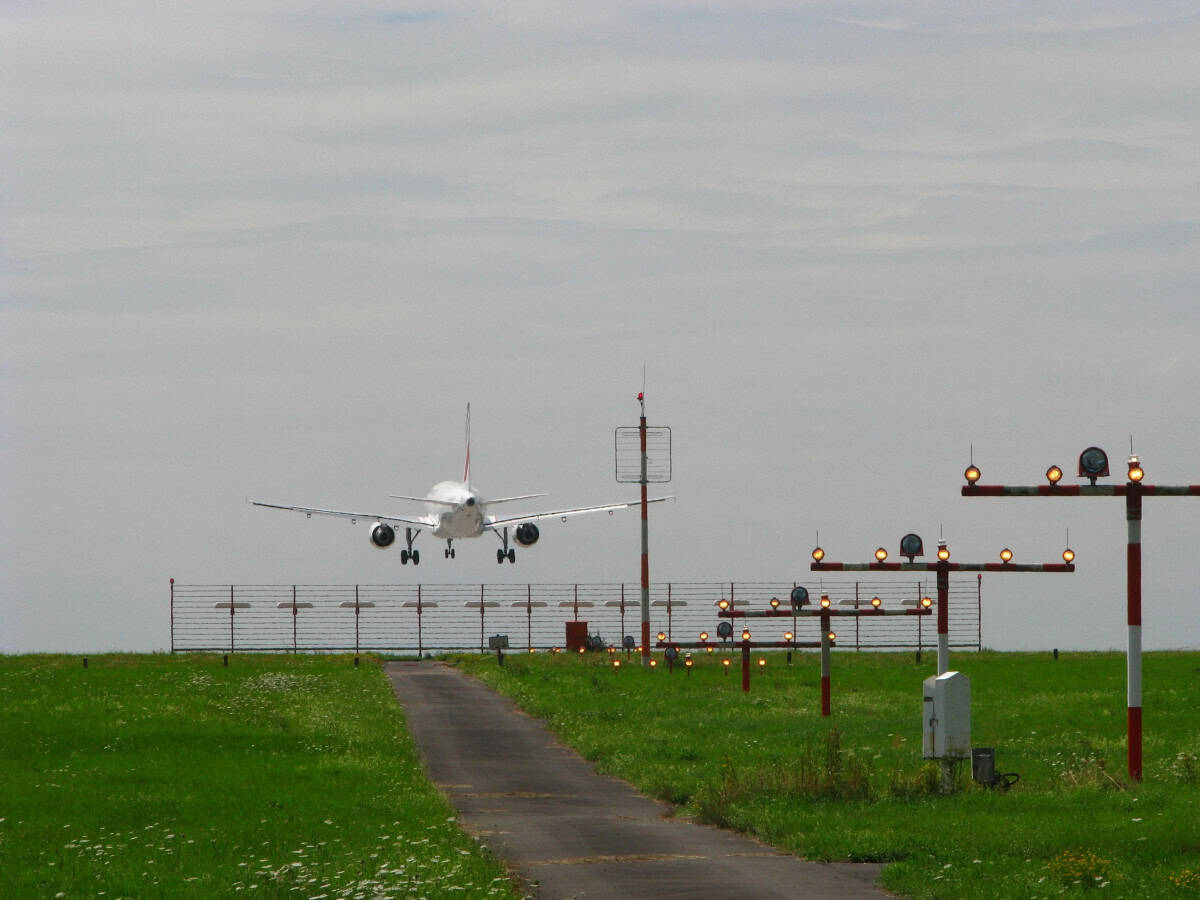
ILS is one of the most impressive systems in aviation. For a pilot, it's like driving on invisible tracks. For a passenger, it's a guarantee that the aircraft will hit the exact centre of the runway, even in fog, rain or at night.
ILS to Instrument Landing System — a precision approach system that guides the aircraft:
- after the course (left–right),
- on the glide path (up–down).
In short: The ILS tells the aircraft where the runway is and how to approach it.
What does an ILS consist of?
ILS consists of two main signals:
1. Localiser (LOC)
He is flying a plane along the waistline. It shows whether you are:
- too far to the left,
- too far to the right,
- right in the middle.
That is a „kierunek”.
2. Glideslope (GS)
He is flying a plane on the glide path, usually 3°. It shows whether you are:
- too high,
- too low,
- right on the path.
That's „height”.
Together they form precision tunnel, which the aircraft uses to taxi onto the runway.
How does a pilot use the ILS?
The procedure is simple:
- The pilot is setting the ILS frequency.
- Enables the mode App on autopilot.
- The plane is catching localiser (course).
- After a moment it catches on glideslope descending.
- Autopilot flies the aircraft along the ideal path.
- The pilot takes control or performs an autoland (if available).
ILS acts like a „magnet” that draws the aircraft to the runway.
What does an ILS approach look like in practice?
Imagine you are flying in dense fog. You can't see the runway. You can't see the ground. You only see the instruments.
And ILS tells you:
- „You are a bit to the left — adjust it.”
- „You are too high — descend.”
- „You are perfectly on track — keep going.”
This is the beauty of ILS — weather-independent precision.
ILS Categories — or just how „precise” the system can be
Category I
Decision height: approx. 200 ft Visibility: approx. 550–800 m The pilot must see the runway to land.
CAT II
Minimum decision height: approx. 100 ft Visibility: approx. 300–400 m More precise.
CAT III A/B/C
Decision height minimum: down to 0 ft Visibility: extremely low Possible autoland.
CAT III is aviation magic — the aircraft can land practically „blind”.
Can the ILS fail?
Rarely, but it does happen — which is why pilots always:
- they monitor instruments,
- they have approach minima,
- they are ready for go around,
- comparing the readings with other systems (e.g. PAPI).
The ILS is precise, but the pilot is responsible.
ILS in the simulator — why is it worth getting to know?
Because it is one of a pilot's most important skills.
In the simulator you can:
- set the ILS frequency,
- turn on the app,
- capture the localiser,
- capture the glideslope,
- make a perfect landing,
- try an autoland (if the aircraft supports it).
That gives a huge amount of satisfaction — especially when doing an approach in fog.
Summary — what is ILS?
ILS to:
- precision approach system,
- guidance along the course and path,
- safety in difficult conditions,
- the foundation of modern aviation.
The pilot sets the ILS. The autopilot guides. The pilot supervises.
Simple. Brilliant. Reliable.
You want to fly your first ILS approach
Do you want to fly your first ILS approach and feel the aircraft „fall” perfectly onto the runway?
Book a flight in the AirPoint simulator and carry out a full precision approach.