
What does airline training look like? A complete step-by-step guide
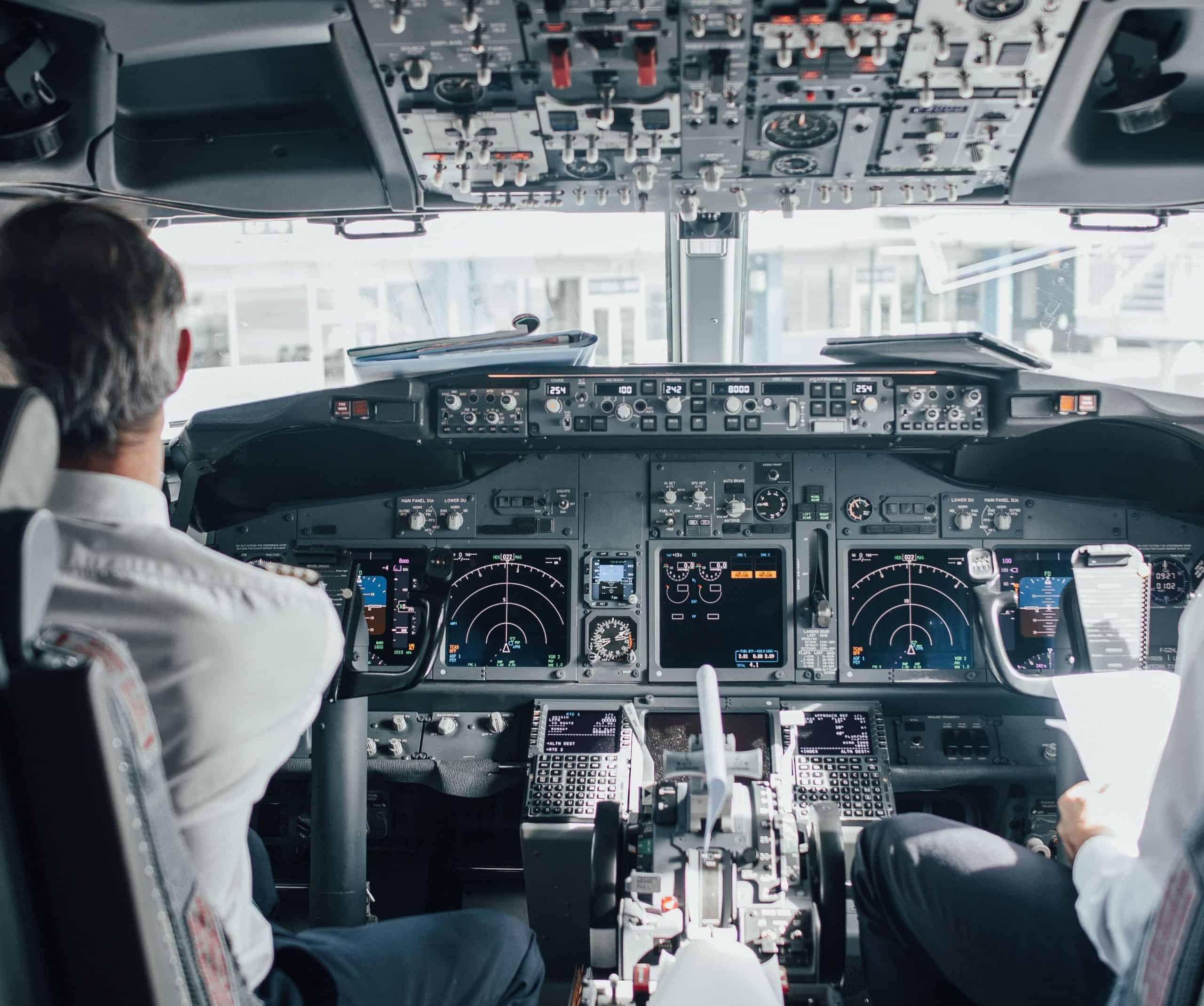
The road to becoming an airline pilot is long, demanding and expensive — but entirely achievable. In Poland and under the EASA system, there is a clearly defined path that leads from the first introductory flight all the way to the cockpit of a Boeing or Airbus. Training involves licences, medical examinations, theory, practice, simulators, exams and recruitment — and every stage has its own requirements and pitfalls.
This article will guide you through the entire process step by step, based on current data and the realities of the aviation market.
1. Prerequisites — before you start the training
Before you enrol on any course, you must meet a few basic conditions:
Aero-medical examinations
This is the absolute first step — without them, there is no point in investing in training. For the career path, it is required Class 1 medical certificate, which evaluates:
- cardiovascular system,
- respiratory system,
- nervous system,
- sight and hearing,
- psychological predispositions.
Screening eliminates the risk of spending a lot of money if the candidate does not meet the health requirements.
Age
- 16 years old — first solo flight
- 17 years old — PPL(A) licence
- 18 years old – CPL(A) licence
Predispositions
They come in handy:
- good hand-eye coordination,
- stress resistance,
- knowledge of English (CPL/IR/ATPL exams are in English).
2. First step: trial flight
Before you start the training, most centres recommend familiarisation flight, which allows:
- check that you feel comfortable in the cabin,
- assess stress and overload response,
- make sure it is the right path for you.
This is the simplest way to avoid a bad decision.
3. Stage 1: PPL(A) licence — the first real step
The PPL(A) licence is the foundation of the entire path. It qualifies you for non-commercial flights and opens the way to professional licences.
Requirements and course of training
- minimum 45 hours of flight time,
- around 100 hours of theory,
- practical training: circuit flying, navigation, emergencies, solo flights,
- theoretical exams at the CAA,
- practical test with an examiner.
Cost: £20,000–£30,000 (depending on the centre).
4. Stage 2: Building up flight hours
After your PPL(A) you need to gain experience — usually 50–100 hours additional raid, often in the form of:
- navigational flights,
- solo flights,
- improving pilot technique.
This is a stage that many candidates underestimate — and it is crucial for subsequent vocational training.
5. Stage 3: Additional ratings — NVFR, ME, IR
Before you move on to the CPL(A) licence, you must acquire additional qualifications:
NVFR — night flights
A short module that significantly enhances pilot skills.
ME — Multi Engine
Multi-engine aeroplane rating.
IR — Instrument Rating
Instrument rating — absolutely crucial for airline pilots.
6. Stage 4: CPL(A) licence — commercial pilot licence
The CPL(A) licence allows you to fly for remuneration.
Requirements
- minimum 150–200 flight hours,
- theoretical and practical training,
- theoretical exam,
- practical exam.
Cost of the full CPL(A)+IR+ME path: £100,000–£150,000.
7. Stage 5: ATPL(A) — airline transport pilot licence
ATPL(A) is the highest pilot qualification. After training you receive the so-called. frozen ATPL (fATPL) — becomes active upon acquiring 1,500 flight hours.
8. Stage 6: „Lining up” training — MCC, JOC, UPRT
These are training courses preparing for work in a multi-crew cockpit:
- MCC (Multi Crew Cooperation) — crew cooperation,
- JOC (Jet Orientation Course) - jet aircraft handling,
- UPRT - upset recovery training.
This is the stage that often determines whether a candidate will succeed in the recruitment process.
Step 7: Airline recruitment
The recruitment process usually includes:
- knowledge and aptitude tests,
- simulator (most important stage),
- interview with the committee,
- psychological tests.
Following a successful recruitment process, the candidate undergoes:
Type Rating
Type rating training, e.g., on a Boeing 737 or Airbus A320.
Line Training
Passenger flights under the supervision of a line training captain.
10. How much does the full airline pathway cost?
According to current data:
- PPL(A): £20,000–£30,000
- CPL(A)+IR+ME: £100,000–£150,000
- ATPL(A) + additional training: total of approx. £200k
This is an investment that requires financial planning and training regularity.
11. How long does airline training take?
Depending on the route:
- integrated (full-time)18–24 months
- modular (flexible)2 to 4 years
Summary – what does airline training look like?
In short:
- Aero-medical examinations
- Trial flight
- PPL(A)
- Building flying hours
- NVFR, ME, IR
- CPL(A)
- ATPL(A)
- MCC, JOC, UPRT
- Recruitment
- Type Rating
- Line Training
It's a long, challenging, but realistic path — hundreds of people in Poland go through it every year.
Want to see what a pilot's job looks like from the inside?
Do you want to see what a pilot's job looks like behind the scenes?
Choose a flight in the AirPoint simulator and experience what a real Boeing or Airbus cockpit looks like.